
#1 Leash Recommendation: Try a longer one!
I recommend using longer (think 8-50 feet), fixed-length leashes for all walks to allow more freedom of movement than a standard 6-foot leash. I’ll only use a short leash for a dog when we’re at a vet clinic or a pet-friendly business (or if their health requires it).
Long lines are better for dog bodies, for meeting their needs, AND for preventing leash tension. Time to move and sniff freely outdoors matters way more than the number of steps they take!
With time, handling a long line will become second nature. The first time you try this, practice indoors with your leash attached to a chair. Practice reeling your leash in and out, the ‘leash lock grip,’ and ‘walking up’ the leash without pulling the chair to you. Your leash should be a safety tool, not a teaching tool. Avoid pulling your dog around by their leash and using it to ‘correct’ them.
Read To Teach Loose Leash Walking, Loosen the Leash (and Other Insights From Years of Doing It Wrong) for more explanation on the benefits of a longer leash.
Watch the video to see me demonstrate and explain some tips for safe long-line handling.
-
Bertie and I are here to show you how to make handling a long line easier. Today she’s got her 30-foot leash on. This leash is made out of the material Biothane, which is waterproof and stink-proof, which is nice for when we’re dragging lines on the ground sometimes. I like these nice locking carabiner connections because Bertie likes to roll a lot, and sometimes her leash might come unclipped that way. Just gives me a little extra sense of security.
I think a lot of folks get real intimidated when I ask them to try using a longer leash. But the important thing to note is that I’m not giving her all 30 feet of the leash the entire time we’re walking. I am reeling it in and out as we’re going along together. So she’s typically not all 30 feet away from me, but if she wants to walk up further, I can give her that room to do so.
Flexi leashes can be appropriate in some circumstances. I’m not hard and fast against them, but typically I prefer this because it’s easier actually for me to reel in. If shes’s, you know, pulling against me I can literally walk up her line like this to get her in closer. Whereas with an adjustable leash- could be pretty hard to get her back in.
The end of the leash, my leash handle, I don’t have it over my wrist like this. I have it on my finger, over my finger, so I can just kind of keep adding to this figure 8 coil and letting it go. If I wanted to keep her shorter and closer to me, I could reel her in to the length I want. And then in this hand [leash anchor hand] I’m going to put on a leash lock grip, which is where the last bit of leash is. I’m going to make a loop. I can put it either over my pointer finger or my thumb, and I can lock it on that way. I just take the end of the leash and fold it over my thumb on top of my bundle [of coiled leash].
Now I’ve got this locked on right here and she has only got, you know, effectively a 5-foot leash. And I can very easily then just let it go and continue letting out the line as she, you know, goes to sniff where she pleases and reeling it in as she pauses and comes back to check in with me.
-
Lily, a white femme person with long braided red hair, wears a safari hat and hiking clothes as they walk their dog on a trail. Their dog, Bertie, is a medium-to-small sized black pit bull mix, wearing a minimal black/purple harness attached to a 30-foot long, sage colored leash. They walk down a wide trail through some woods in the early spring. The landscape is still primarily brown and scruffy, but the sun is shining. The camera follows behind and beside Lily as they walk Bertie.
Lily talks to the camera, describing how to safely and easily handle a fixed-length long line. They are continuously reeling the leash length in and letting it out according to how far Bertie wanders. They have the trail to themselves and Bertie is following her nose and pausing to sniff, taking advantage of the extra room to roam. She occasionally stops to check in with Lily, at which point Lily usually stops to grab and feed her a treat.
When Lily tells the camera that they like a locking carabiner leash attachment because Bertie likes to roll a lot, the video cuts to a clip of her rolling on her back and wiggling on the side of the trail.
They continue walking along as Lily shows how they coil the leash in a figure 8 pattern (rather than a standard loop, which can cause finger injuries). They keep the leash handle looped over their left open palm (not wrist) and add the extra leash length to that hand with their right hand, in a figure 8 bundle.
Lily then describes how to use a ‘leash lock grip.’ They reel the leash into their desired length, five feet in this example, and then fold the last bit of leash outside their figure 8 bundle over their thumb or pointer finger, before closing their fist around the entire bundle, locking the leash in place at five feet long.
Leashes & Accessibility
If fine motor skills are challenging or you feel intimidated by long lines and your dog’s strength, keep in mind:
Even just a few extra feet can make a big difference for many dogs! Try an 8- or 10-foot leash.
Trigger or scissor snaps are usually the easiest to open.
For dogs who dislike having people in their space, scissor snaps enable quick clipping and unclipping.
If your dog often rolls and squirms on their back, a scissor snap is more likely to come unclipped accidentally.
An auto-locking carabiner is a super-secure leash connection, but it requires dexterity to rotate the bar and open it.
Retractable leashes can be an important accessibility tool for some! They feature a larger grip and require less line management, but keep in mind they do pose extra risks.
I’m not against retractable leashes, and I use them with my own dogs in some contexts (especially muddy walks on our property)! I don’t recommend using retractable leashes in busy, populated areas until you’ve trained very solid leash skills.
These leashes increase your risk of finger injuries, are hard to reel in, and can be unlocked with an accidental bump. Additionally, an accidentally dropped adjustable leash can traumatize a dog, as it bounces after being dropped and chases them.
I appreciate the extra freedom these leashes allow, but I still recommend at least trying a fixed-length, longer leash if you’re able!
Consider choosing a leash with an added traffic handle closer to your dog for quick snagging if you worry about handling your dog.
Over time, I’ve come to prefer a strategically placed ‘leash lock grip’ over the extra bulk of a traffic handle and potential for tangles. However, having the extra handle helped me feel more secure when I was first learning to use long lines!
Hands-free leashes can be worn cross-body or around your waist, & they’re a popular choice for strong dogs and folks worried about dropping the leash.
If you can have trouble balancing, hands-free leashes probably aren’t a good choice.
You can clip these modular leashes around chairs, wheelchairs, trees, tables, etc. Keep your dog’s history and strength in mind!
If you lack the grip strength to keep up with your dog, consider a leash with better traction (examples linked below), wearing grippy gloves, or creative grip tools.
I’ve heard that horse-riding and cycling gloves work great for leash handling. Many gloves exist that increase grip strength!
The Quick-Control Dog Leash is a great example of the style handle that I’m excited to see more interpretations of. Unfortunately, this leash is only 6 feet long, and the handle isn’t removable, so you can’t attach it to a leash you already have.
If you have access to a 3D printer and are creative, this leash grip model looks promising to me. If you enjoy engineering or tinkering, I’d love to hear your ideas!
With good teaching and practice, many people can handle a long line safely! Please reach out for more personalized, explicit guidance.
A peer of mine offers a $25 webinar, Long Story Short, that covers more techniques for safely walking your dog on a long leash.
Product Recommendations:
My favorite makers are those at High Tail Hikes. HTH is a small, women-owned-and-operated business that prioritizes working with force-free dog professionals and giving back to their community, especially community shelters.
If you’re interested, I have a $10 off referral link for HTH.
These opinions are my own. I don’t receive any compensation for these recommendations.
Leash Recommendations
-
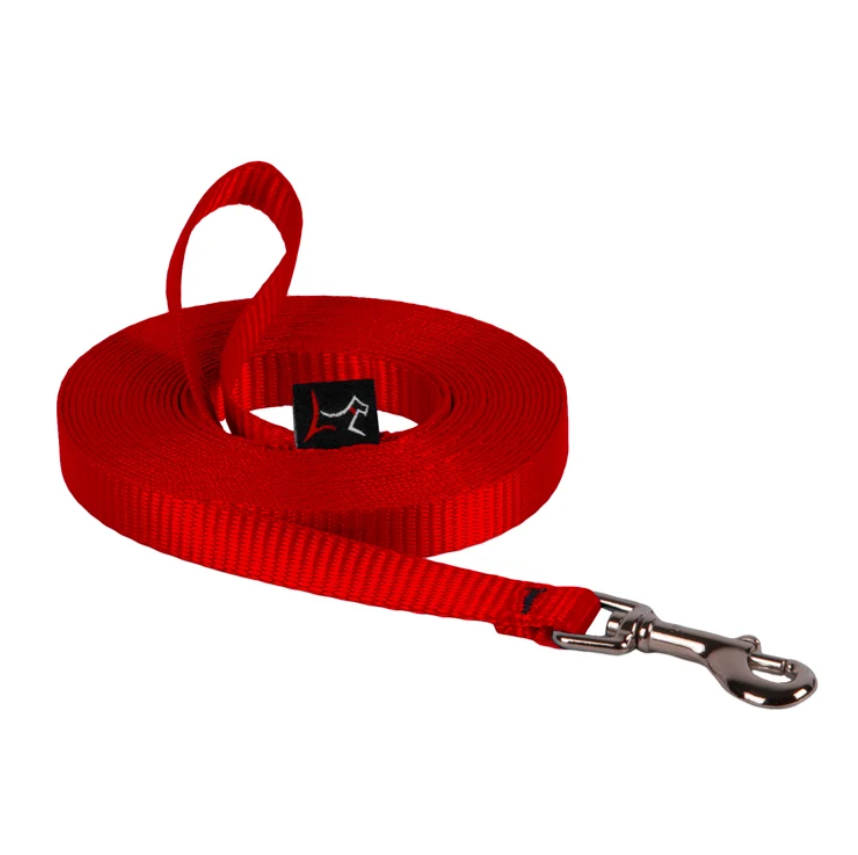
Basic Nylon Training Leash
Buy for $24-31
Choose from:1/2 or 3/4 inch width
8 colors
15 or 30 feet length
-
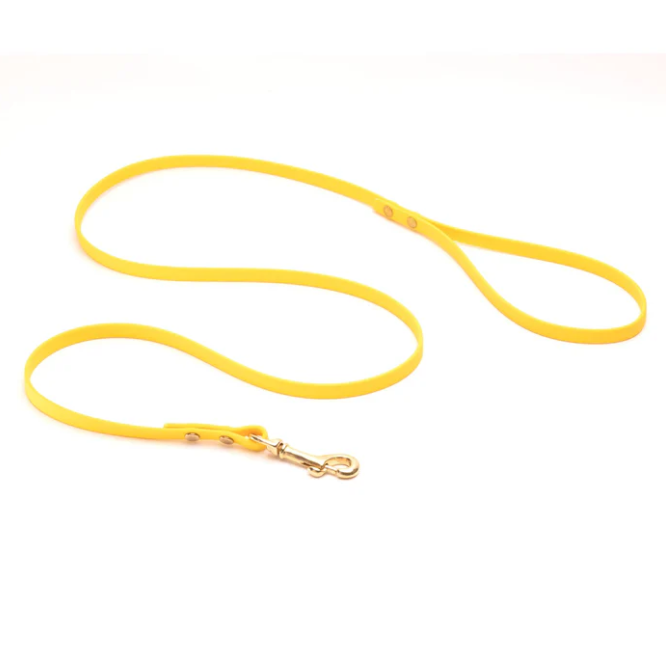
HTH Quick-Ship BioThane Leashes
Buy for $46+
Choose from:brass bolt snap or auto-locking carabiner
3/8, 1/2, or 3/8 inch width
4-50 foot length
19 colors
-
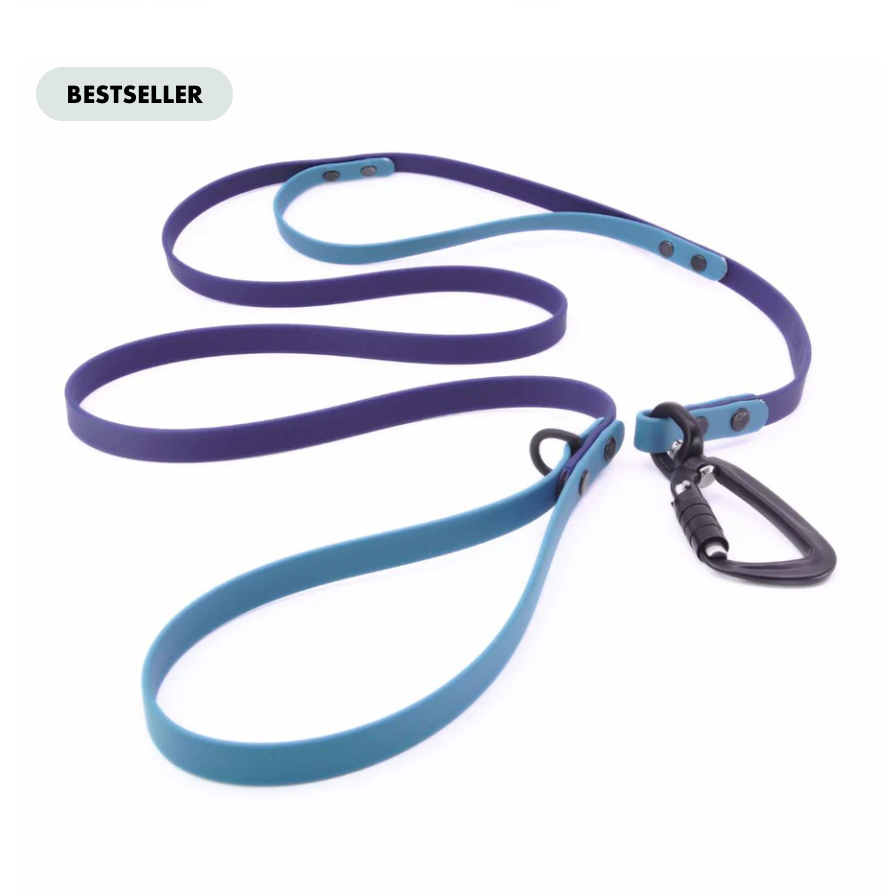
HTH Custom BioThane Leashes
Buy for $46+
Customizable:length (4-50 feet)
width (3/8, 1/2, 3/4 inches)
19 color choices
brass scissor, bolt snap, or auto-locking carabiner
add ons: a traffic handle, D-ring to handle, two-tone
-
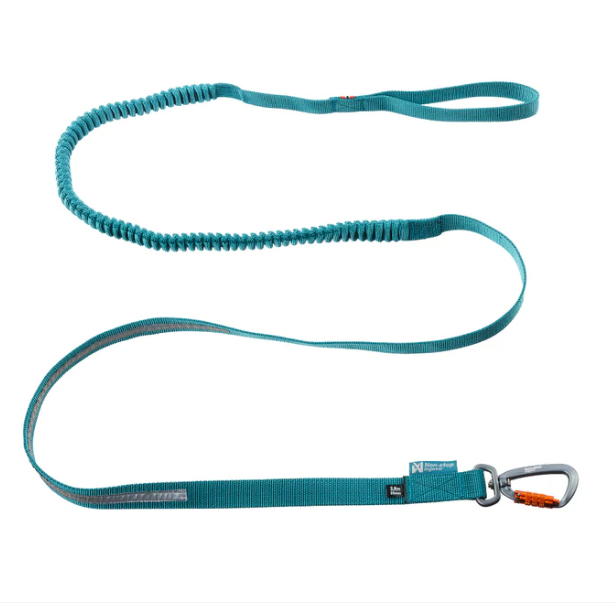
Touring Bungee
auto-locking carabiner
elastic lessens sudden impacts
reflective & black or teal color
23 millimeters (0.9 inches) wide
2.8 - 3.8 meters (9.2 - 12.5 feet) long
I love the 3.8m bungee leashes for busier environments.
-
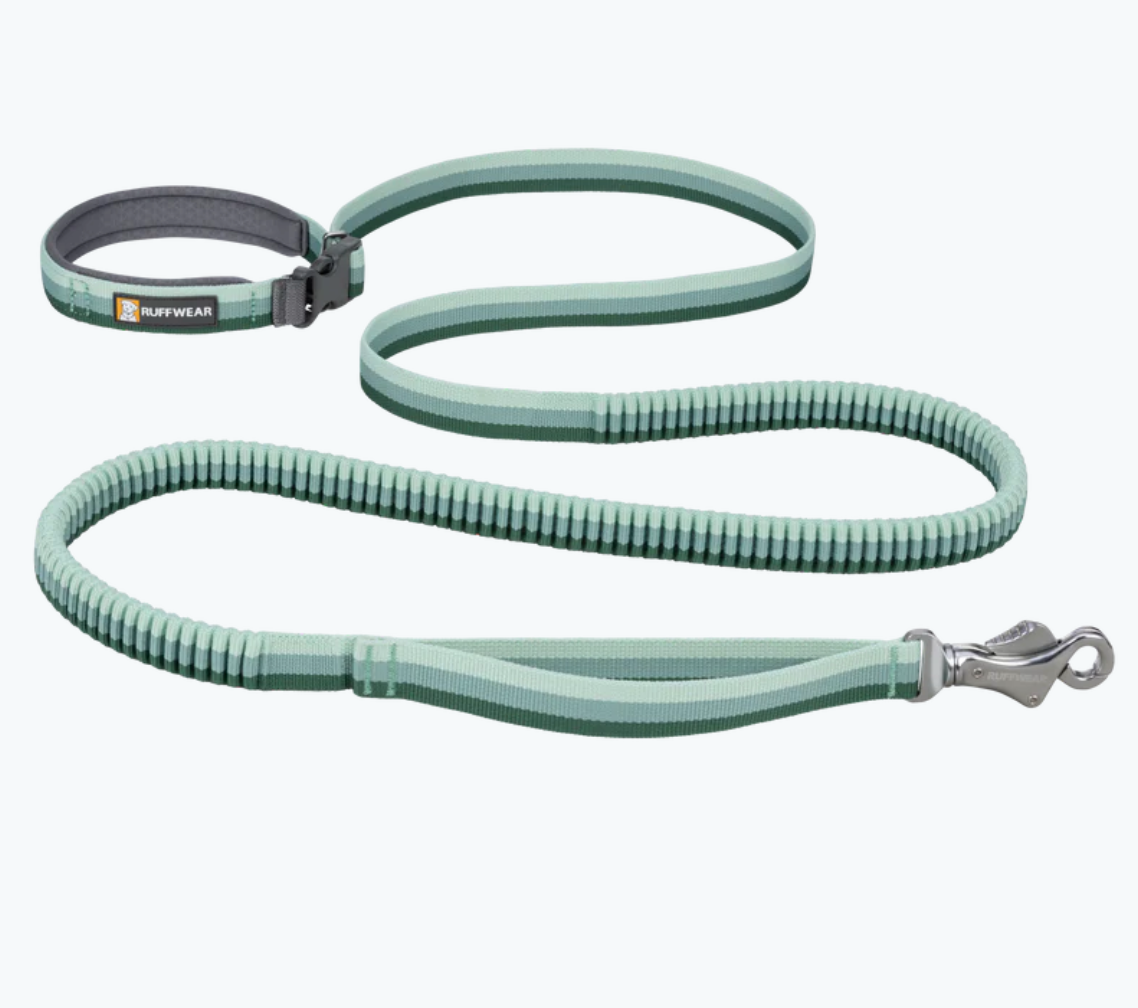
Roamer Bungee Leash
scissor-style clip
stretch webbing lessens sudden impacts
traffic handle
3 colorways
hands-free capabilities
7.3 - 11 feet long
-
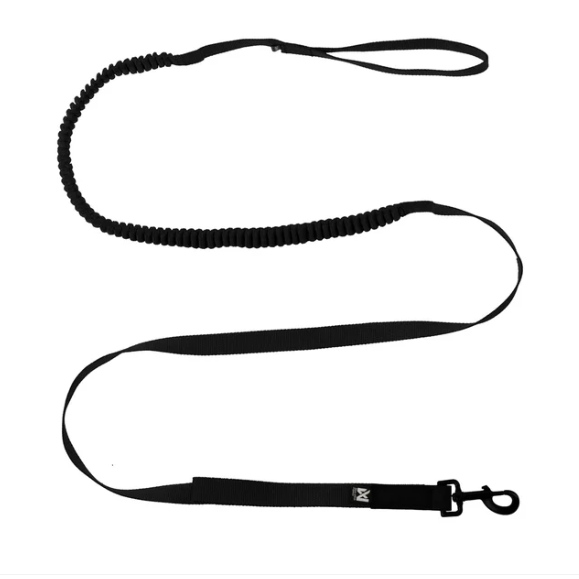
Touring Bungee WD
bolt snap carabiner
elastic lessens sudden impacts
black or olive
23 millimeters (0.9 inches) wide
2.8 meters (9.2 feet) long
-
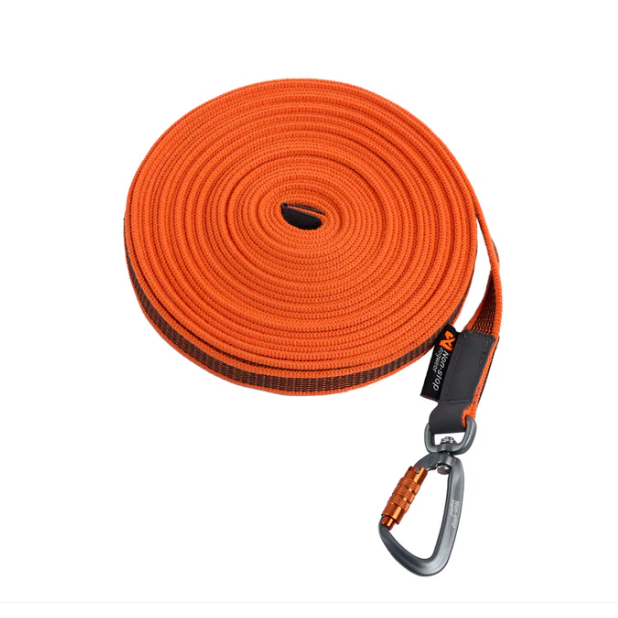
Friction Long Line
twist-lock carabiner
rubber tracing sewn in for superior grip
high-vis orange
10 or 15 meters long (~33 or 49 feet)
-
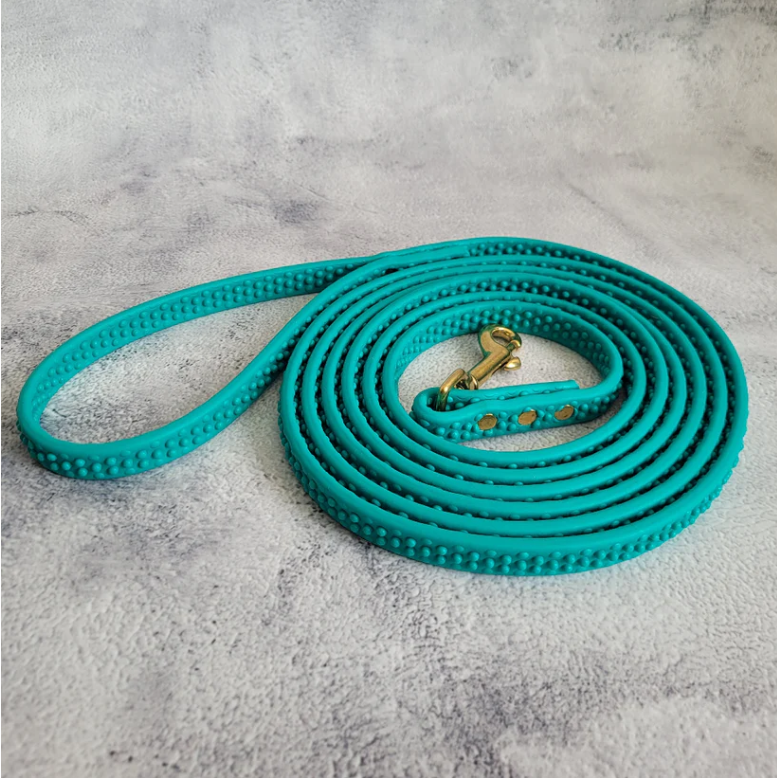
Super Grip BioThane Leash
Buy for $34-100+
Choose from:bolt-snap color
7 colors
3-50 foot length
-
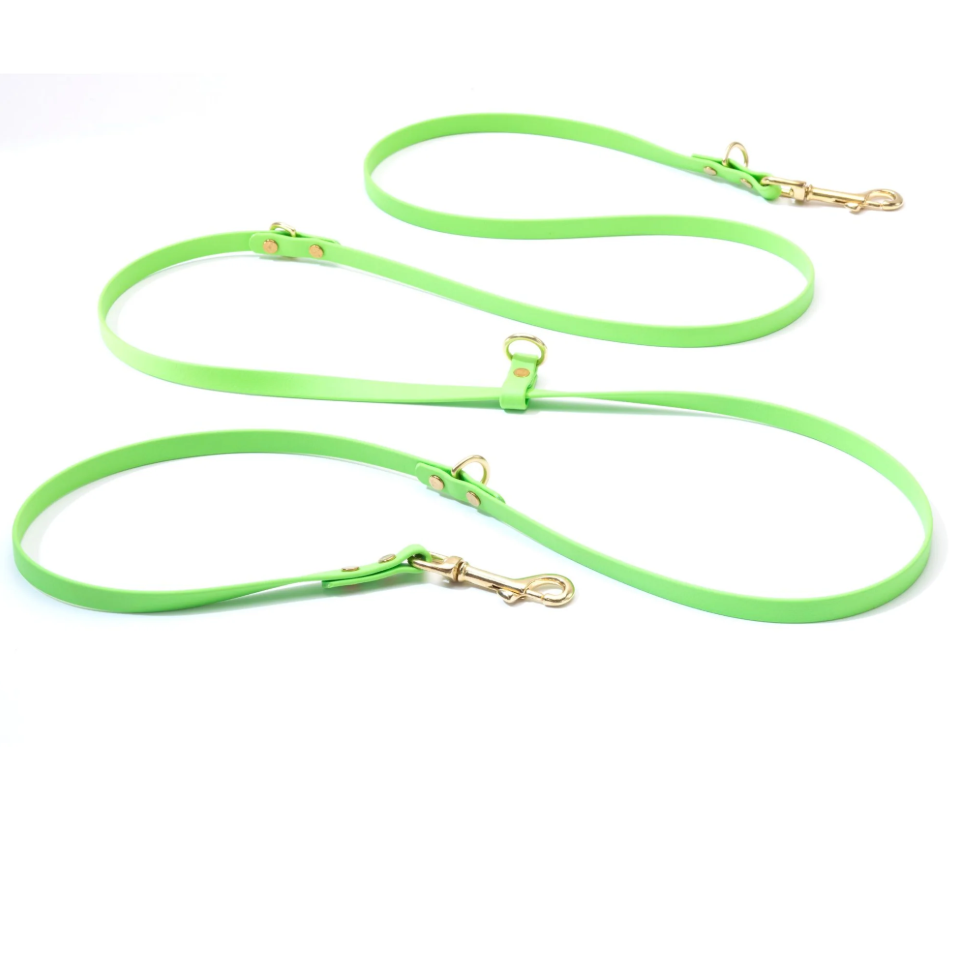
HTH Custom Multi-Way BioThane Leash
Buy for $71+
Modular with hands-free capabilities
Customizable:length (8-30 feet)
width (3/8, 1/2, 3/4 inches)
19 color choices
brass scissor, bolt snap, or auto-locking carabiner
add-ons: a traffic handle, two-tone
My 15-foot carabiner multi-way leash is my most used!